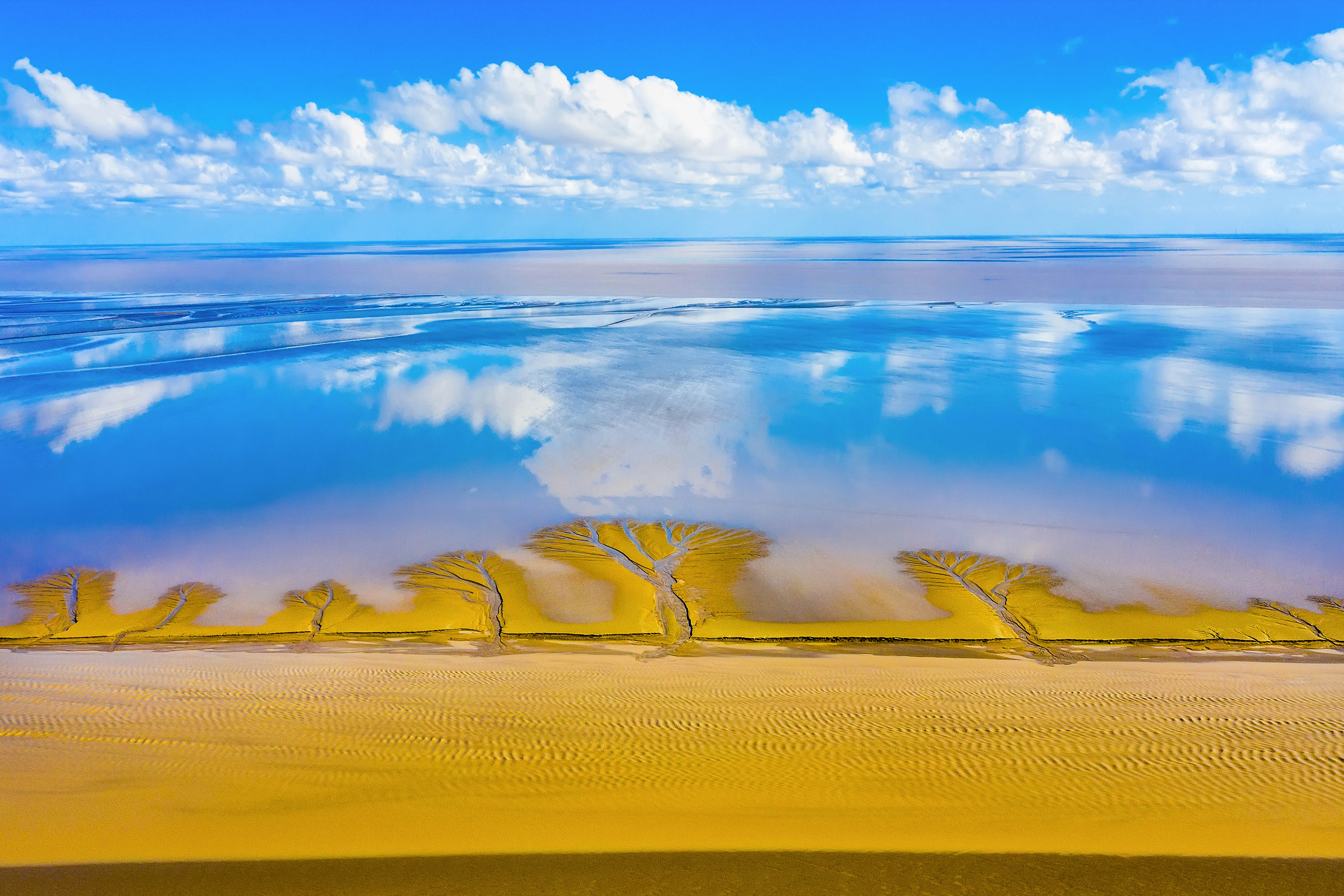
In 2025, following Xi Jinping Thought on Eco-civilization, Jiangsu synergized high-quality development with high-standard environmental protection, gradually turning the vision of a beautiful Jiangsu into reality.
Ecological and environmental quality improved steadily. The PM2.5 concentration was kept at 31.3 µg/m3, and 83.8% of days in the year saw good air quality. Approximately 94.8% of surface water sections under national monitoring met Grade-III standards (moderate water quality) or above, with water quality reaching the excellent level for four years in a row. The water quality of the Yangtze River Jiangsu section mainstream has remained at Grade-II standards (good water quality) for eight straight years. The water quality of the Taihu Lake has been maintained at Grade-III standards for two consecutive years, with further drops in total phosphorus and nitrogen concentrations. The water quality of the entire Jiangsu section of the Grand Canal has reached Grade-III standards or higher for five consecutive years. Over 84% of offshore waters recorded moderate-to-good quality benchmarks. The ecological quality assessment index has been maintained at Grade-II level for five consecutive years. Soil and groundwater quality remained generally stable.
Efforts were redoubled in pollution prevention and control. Over 4,500 key air pollution control projects were implemented, deep denitrification retrofits were completed for all coal-fired power units with an installed capacity of 100,000 kilowatts and above, and the Emergency Plan of Jiangsu Province on Heavy-Polluting Weather was revised. As a result, the number of days with heavy air pollution was slashed. A total of 590 key water protection projects were carried out, and the domestic sewage and industrial wastewater treatment capacities were increased by 1.175 million tonnes per day and 582,000 tonnes per day respectively. The Sanhe River in Huai’an and the Dasha River in Xuzhou were listed among the fourth batch of national model cases of Beautiful Rivers and Lakes. Headway was made in “zero-waste city” development. A total of 22 counties (county-level cities and districts) completed building Beautiful Villages across their entire administrative areas. The Ganyu section of the Haizhou Bay in Lianyungang, the South Qidong section in Nantong, the Xiangshui section in Yancheng, and the Binhai section in Yancheng were recognized as national Beautiful Bays, with the Ganyu section of the Haizhou Bay honored as a model case of national Beautiful Bays.
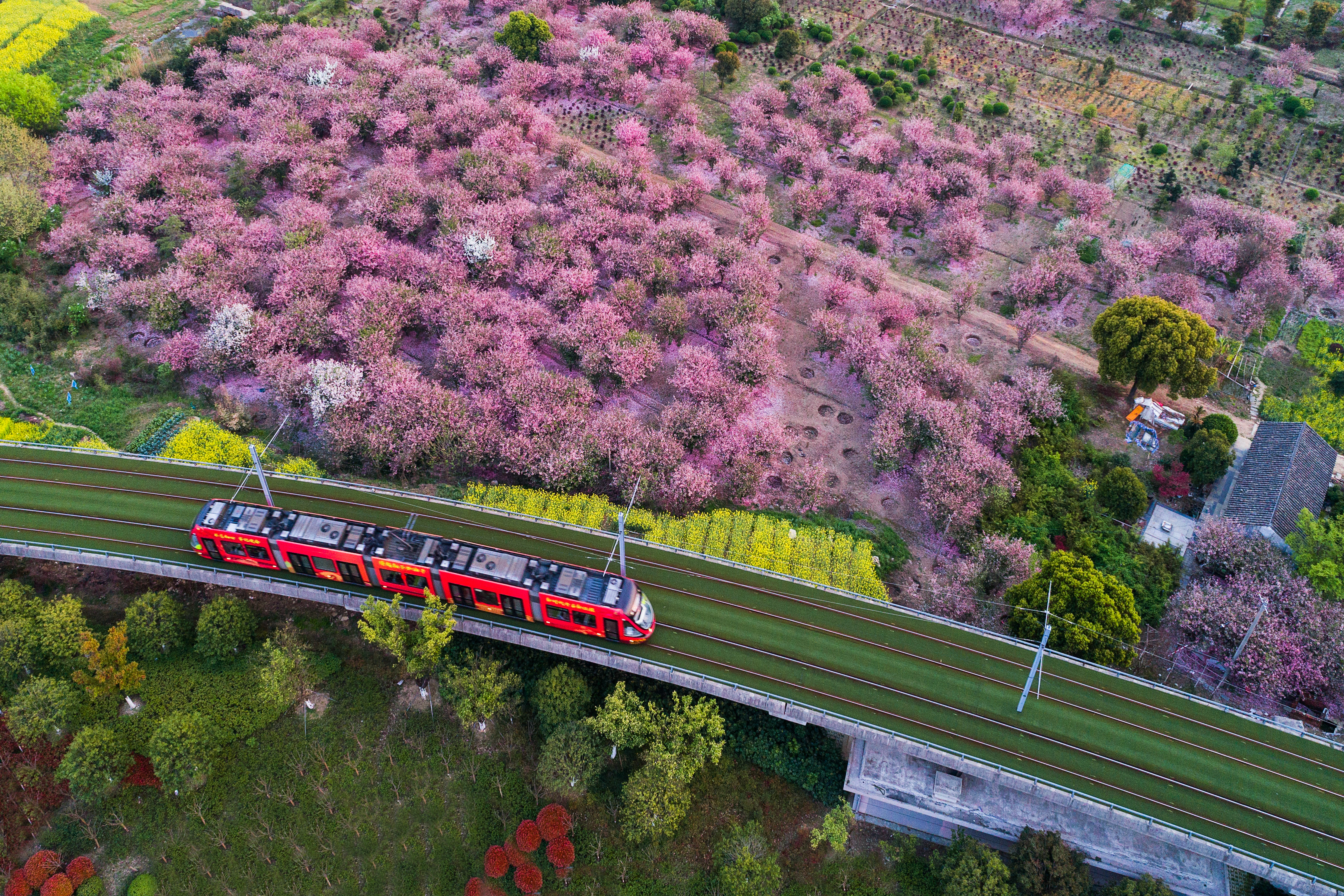
Key river basins received systematic and in-depth treatment. Continued efforts were made to comprehensively improve the Yangtze River’s main stream and tributaries, with the water quality of major tributaries fully attaining Grade-III standards for four consecutive years and water-ecology-related assessment indicators scoring full marks in the past four years. A new round of the three-year comprehensive treatment initiative for the Taihu Lake was implemented, with the water quality of all 15 major inflow rivers meeting Grade-III standards. The water quality of the Changdang Lake and the Yuandang Lake reached Grade-III standards for the first time. Sustained endeavors were made to advance the three-year comprehensive ecological environment improvement initiative along the Grand Canal North-Jiangsu section, ensuring 1.06 billion cubic meters of clean water was diverted to North China in the past year via the South-to-North Water Diversion Project. Unremitting efforts were made to carry out the three-year initiative to reduce pollutants and improve water quality, with 394 key nearshore comprehensive treatment projects advanced.
Notable results were scored in ecological preservation and restoration. A negative list of behaviors for ecological protection and restoration was formulated. Jiangsu took the lead in the country in completing county-level biodiversity baseline surveys across the province, through which the recorded number of species increased to 9,266. Twenty-three pilot Ecological Island zones were under development, with 38 new ecological security buffer zones established. The forest coverage rate and the wetland protection rate reached 24.1% and 50.2%, respectively. About 12,667 ha of land was afforested and greened, and over 500 ha of green space in urban parks were added. In addition, we set up four new national demonstration zones for ecological conservation and four “Green is Gold” practice and innovation bases.
Green transformation was accelerated. The industrial structure went through green transformation, with 901 provincial-level green factories and 19 green industrial parks nurtured, 30 zero-carbon (or near-zero-carbon) factories established and recognized, two industrial parks shortlisted for the first batch of prospective national-level zero-carbon industrial parks, and four regions and industrial parks into national carbon peaking pilot regions and parks. Green and new-energy-driven transformation was advanced in the transport sector, with the green travel rate reaching 74.2%, and the market penetration rate of new energy vehicles reaching 52.5%. Total energy consumption per unit of regional GDP decreased by over 14% in cumulative terms, and the installed capacity of power generation from renewable energy surpassed that from coal.